Showing posts with label IT news. Show all posts
Saturday, October 10, 2009

Microsoft warns of Patch Tuesday from hell


Microsoft will deliver no fewer than 13 security bulletins on October's Patch Tuesday.

The bumper security update includes eight critical issues, and five that are classed as important. Windows 7 RTM also makes an appearance in the Patch Tuesday line-up for the first time.


The 13 bulletins address a total of 34 vulnerabilities, most of which are related to remote code execution. There are also fixes to counter denial-of-service attacks, elevation of privileges and spoofing.

The affected software includes every version of Windows, Internet Explorer, Office, Silverlight, SQL Server and more. Just to add to the IT department headaches, all of them will likely require a restart of the patched PC.

Even though it isn't officially launched yet, Windows 7 is affected by five of the bulletins, although only one of those is critical. The final RTM version of Windows 7 has been available for download to MSDN/TechNet subscribers and businesses for a few weeks now, even though consumers won't get their hands on the software until 22 October.

More than 700,000 people in the UK are also running the Windows 7 beta.

Internet Explorer 8 is also affected by one of the critical bugs.

The patch onslaught means it's likely to be a busy time for IT departments, many of which will want to test the updates before rolling them out across the company.

Superstitious readers will have noted the 13 patches will arrive on 13 October. Read the Microsoft Security Bulletin for full details.

Author: Barry Collins
source : pcpro.co.uk
Tuesday, August 11, 2009

Microsoft Purchase Office.com Domain of Belgium

Microsoft finally buy a domain name Office.com, preparation for discharge Office10. Office.com previously owned by the company with the name of Belgian origin ContactOffice.

Microsoft does not mention how much money they spent to take Office.com. While the user will move to Office.com contactoffice.com

Below is the announcement of Office.com, a user must move the data to the new site and change the e-mail address:


Dear Office.com Users,

As you know from the recent email we sent you, we will be transitioning the operation of your Virtual Office account to ContactOffice.com during the next 30 days.
As part of this transition, on Monday, June 29, 2009, we changed email addresses in the office.com domain to ones in the contactoffice.com domain.

To access your existing account, you will now need to log in at Virtual office

As of Friday, July 31, 2009, Office.com will no longer be available so please be sure to bookmark this URL for future use. Also, if you use POP or IMAP with Office.com you will need to change your settings to pop.contactoffice.net and imap.contactoffice.net respectively.

For new users looking please visit us at 'http://office.contactoffice.com to register for your free subscription.

We are committed to making this transition as seamless as possible and are working hard to minimize any inconvenience these changes may cause. If you have any questions or comments, please feel free to contact me by email at tom@contactoffice.com or by telephone, toll free, at 1-866-675-1776.

Sincerely yours,
Tom Graham and the Office.com Team

Wednesday, April 29, 2009

Mozilla delivers Firefox 3.5 Beta 4, boosts speed

Mozilla Corp. late yesterday released Firefox 3.5 Beta 4, the latest development preview of the company's next browser, which has been delayed several times and now is tentatively slated to ship before the end of June.

The milestone features more work under the hood -- particularly in stability and performance of the new TraceMonkey JavaScript engine -- as well as tweaks to the private browsing mode and improvements to the underlying Gecko layout engine, said Mike Beltzner, director of Firefox.


Computerworld's tests showed that Firefox 3.5 Beta 4 is about 19% faster than Beta 4 in the SunSpider JavaScript benchmark; both betas were considerably faster than the production browser, Firefox 3.0.10, which was also released yesterday.

Other enhancements, said Beltzner in a message posted to the mozilla.dev.planning forum, have been made to Firefox's new location awareness feature, and support for Web worker threads -- an enhanced scripting functionality that lets site developers shift JavaScript computations to a background thread -- has been completed.

As it usually does, Mozilla warned users that Beta 4 is suitable for testing only. "Firefox 3.5 Beta 4 is a public preview release intended for developer testing and community feedback," said Beltzner. We recommend that you read the release notes and known issues before installing this beta."

The beta's release notes highlighted several still-unfixed issues with Firefox 3.5, including problems with Gmail, Google Inc.'s popular Web-based e-mail service, and with parts of the new privacy feature.

Beta 4 is the first major milestone of Mozilla's new browser to carry the "3.5" moniker; originally, the upgrade was called Firefox 3.1, but the company decided it had added enough new features to justify the larger bump in version number from last summer's Firefox 3.0.

Those additional features -- especially TraceMonkey -- caused some delays last year as Mozilla worked to both integrate the new JavaScript engine and test it. Other delays were the result of troublesome bugs, many of them also in TraceMonkey.

Although Mozilla said much earlier in the Firefox 3.5 process that it would ship a limited number of betas before moving on to a "release candidate," it's unclear today what Mozilla's next step will be. Attempts to reach Beltzner via e-mail were unsuccessful.

In 2008, the company issued the last beta of Firefox 3.0 in early April, and the final version in mid-June. Assuming Firefox 3.5's pace is similar, Mozilla should ship Firefox 3.5 sometime in early July.

Firefox 3.5 Beta 4 can be downloaded for Windows, Mac OS X and Linux in 63 different languages from Mozilla's site. Users already running Beta 3 will be notified of the available update in the next 48 hours.

Firefox 3.5 Beta 4 is 19% faster than Beta 3, and more than twice as fast as Firefox 3.0.10, according to the SunSpider JavaScript benchmark test.

source : Gregg Keizer-computerworld.com
Saturday, April 18, 2009

Technological Nature Takes Over


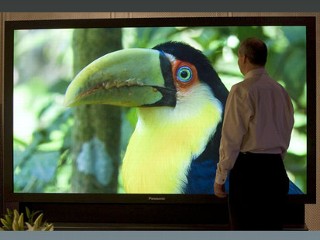
Those new high definition plasma screens can take us down a mountain trail with such clarity that it's almost like being there. And that may be too much of a good thing, according to researchers who fear we may be gradually replacing the real world with something they call "technological nature."


With each succeeding generation we raise the bar on technology, and lower the bar on what we expect from the environment around us, according to psychologists at the University of Washington who fear we may be losing something as technology reshapes so much of the world around us.

Psychologist Peter H. Kahn calls it "environmental generational amnesia."

Kahn coined the expression a few years ago after studying how children in several cities around the world perceive their environment.

The children recognized that animals, plants and parks and open spaces played an important role in their lives. They also knew pollution was a bad thing, but children in Houston, for example, didn't realize it had affected their own city in a big way.

Does Technology Help or Hinder Our Relationship with Nature?

Each generation starts with a new baseline understanding of their environment, Kahn concluded, so the kids in Houston were much more likely to accept a polluted environment that would have appalled their ancestors -- because that's what the kids found when they got there.

More recently, Kahn and his University of Washington team have carried out a series of studies on how technology can hinder, or help, our relationship with true nature. They wanted to know, for example, if a large plasma screen can help calm a stressed person as much as looking out a window at a tranquil setting.

The answer, they say in the journal Current Directions in Psychological Science, is a high def image may help a little, but not as much as the real thing. The results, however, were mixed.

In one experiment, the heart rate was slightly reduced for persons who were mildly stressed after they looked through a window, but the plasma screen was no better than looking at a blank wall.

But in another study, workers in an interior office with no windows were treated to a real-time plasma image of the scene outside their office over a period of several weeks.

In later interviews, the workers told the researchers they were comforted by the images of the world they could not see from their interior office.


By LEE DYE
source : abcnews.go.com
Sunday, April 5, 2009

Japan aims for walking robot on the moon by 2020


By JAY ALABASTER

TOKYO (AP) — Japan hopes to have a two-legged robot walk on the moon by around 2020, with a joint mission involving astronauts and robots to follow, according to a plan laid out Friday by a government group.

Specifics of the plan, including what new technologies will be required and the size of the project's budget, are to be decided within the next two years, according to Japan's Strategic Headquarters for Space Development, a Cabinet-level working group.


Development of a lunar robot is part of a broad framework outlined by the group, which is charged with plotting a new course for Japan's space strategy. As a next step, joint exploration of the moon involving robots and astronauts will be considered.

The framework is to be finalized late next month, after the public has a chance to comment on the proposals.

The group also recommended promoting research into military satellites, such as an early warning system for detecting ballistic missile launches and systems to detect and analyze radio waves sent in space.

Other recommendations by the group include using space research as a tool to foster diplomacy with other countries and developing an advanced satellite to predict and monitor natural disasters.

The Strategic Headquarters was established last year by a law passed to advance Japan's space technology and exploration. It allows the country, which has a largely peaceful constitution, to use space for military defense.

Friday's proposal was released as North Korea was completing preparations to launch a multistage rocket over Japan. The communist country says it will send a communications satellite into orbit, but Tokyo suspects the North, which has acknowledged it has nuclear weapons, is actually testing long-range missile technology.

Japan launched its first satellite in 1970 and has long been among the world leaders in space technology. But in recent years, it has been overshadowed by China, which is aggressively pushing its own space program.

In January, Japan used one of its rockets to launch the first satellite to monitor greenhouse gases worldwide, a tool to help monitor global warming.


Saturday, April 4, 2009

BBC streaming live to Nokia 5800s


Our friends at Electricpig have spotted some interesting news - namely that the Nokia (NYSE: NOK) 5800 can now stream live TV shows from the BBC

The BBC has a beta of it’s live streaming service, which you can access by aiming the 5800’s browser at: http://www.bbc.co.uk/mobile/live/tv

The suggestion of course would be that you utilise the WiFi chip in your handset to get to the site, if you are going to be doing data-intensive video streaming - your choice of course, but without unlimited data in your tariff then you’ll get a big bill over 3G!

Certainly a cool feature, and the BBC is great for content, of course - we’ll hope this gets rolled out to other Nokias going forward!

By Ben Robinson
source ; http://www.intomobile.com

Wednesday, April 1, 2009

Intel Launches Xeon family to New Server


Intel introduced a new range of family-based Xeon processors. No responsibility tangung Intel launched its 17 processor variants, led by Intel Xeon Processors Series 5500.


Xeon with the new code name Nehalem-EP offers some technology like that can reduce energy use automatically without reducing system performance.

With new technology called Power Gate, teranyar processor is claimed to reduce power use. In fact, according to Intel reduction obtained with this technology can achieve 50% of the Xeon product before.

How has the integrated features that are unique be calculated. This feature will turn off processor cores that are not used if in the idle condition, which can save energy that will be used.

In addition, Intel also embed features into their new processors. Including, Intel Turbo Boost Technology, Hyper-Threading Technology and Intel Virtualization Technology.

"Intel Xeon Processor 5500 series is the basis innovations for decades to come," called Patrick Gelsinger, Senior Vice President and general manager Intel Digital Enterprise Group

source :Trisno Heriyanto - detikinet

Monday, March 30, 2009

Intel boosts speed of low-power processors

The new chips should boost the speed of applications without increasing power usage over that of earlier chips

Intel is expected to refresh its line of laptop chips Monday with new ultra-low-voltage processors that should make ultraportable laptops operate faster without sacrificing battery life.

IDC Study Results: The Common Resource Gap Facing Midsize Companies and the Time-Tested Alliance that Can Save Them - read this white paper.

Intel currently offers ultra-low-voltage processors for fully functional thin and light laptops, such as Apple's expensive MacBook Air and Lenovo's ThinkPad X300. These chips fit into small spaces and draw less power than conventional laptop chips. The chips are about the size of a dime, or 60 percent smaller than mainstream laptop chips.he chips are about the size of a dime, or 60 percent smaller than mainstream laptop chips.


Laptops with the new chips should boost the speed of applications while drawing the same power as with the earlier chips. The chips will run at clock speeds of up to 1.6GHz, a speed bump from earlier chips that ran at up to 1.40GHz. Depending on the applications, existing ultraportable laptops with ULV chips run from anywhere between four to seven hours.

"There should be no difference to battery life with these speed bumps," said a source familiar with Intel's plans.

The chips will be available on Monday, according to the source. They will be a part of Intel's Montevina mobile platform, which bundles mobile laptop chips and wireless capabilities into laptops.

Are you ready for event-driven business? - watch this webcast.

The refresh comes ahead of Intel's planned release of new ultra-low-voltage processors for inexpensive laptops, which are due in the second quarter as part of the updated Montevina Plus platform.

The new chips include the dual-core Intel Core 2 Duo SU9600 chip, which will run at 1.60GHz, include 3MB of cache and draw 10 watts of power, according to an Intel document seen by IDG News Service. It will be priced at $289 for 1,000 units. The single-core Intel Core 2 Solo SU3500 chip will run at 1.40GHz, with 3MB of cache. It will be priced at $262.

Intel is also releasing faster low-voltage (LV) processors as part of the laptop chip refresh. The Intel Core 2 Duo SP9600 dual-core chip will run at 2.53GHz, an improvement from previous LV chips that ran at up to 2.40GHz speed, according to the document. The chip will include 6MB of cache, draw 25 watts of power and be priced at $316.

Also being launched is the SL9600 Intel Core 2 Duo, which will run at 2.13GHz, include 6MB of cache and draw 17 watts of power. It will be priced at $316, according to the document.

By Agam Shah

source : infoworld
Friday, March 27, 2009

Microsoft updates WGA in Windows XP Pro

By updating the XP's anti-piracy technology, Microsoft is tacitly acknowledging the continued popularity of the operating system
Microsoft, tacitly acknowledging the continued popularity of Windows XP, said this week it was updating the operating system's anti-piracy technology to detect illegal copies installed with newly stolen or faked product keys, or with new activation cracks.


n an entry to a company blog, Alex Kochis, senior product manager for Microsoft's Windows Genuine Advantage (WGA) program, spelled out the update to WGA Notifications. That's the antipiracy component that provides the messages and other on-screen prompts when the other half of WGA, dubbed Validations, detects an illegal copy of the operating system.

[ Get the analysis and insights that only Randall C. Kennedy can provide on PC tech in InfoWorld's Enterprise Desktop blog. And download our free Windows performance-monitoring tool. ]

"This update includes the latest validation information, including recently stolen or misused product keys and other information," said Kochis, who elsewhere in the blog noted that the "other" category included "attempts to circumvent product activation." Such circumvention methods, called "cracks," are popular downloads on file-sharing sites that also feature pirated software.

The update applies only to Windows XP Professional, added Kochis.

Although Microsoft tried to put a stop to Windows XP sales last year -- and will be shifting it into a more limited support plan next month -- it has relaxed its rules several times since then as customers have continued to demand new PCs with XP rather than Vista. Windows XP Professional is the only version that Microsoft allows users and computer sellers to "downgrade" from Vista.

business? - watch this webcast.

The company has also acknowledged that Windows XP Professional is preferred by pirates over Vista by wide margins, and last year promised it would roll out a campaigns during 2009 to warn people that XP is widely counterfeited.

Kochis touted installation changes to WGA Notifications, although he wasn't clear on what those changes were. "Once the update has been downloaded by Automatic Updates, completely in line with your existing AU settings, after the next login or reboot the install wizard will be presented to the user and they will be able to choose whether to install the update in the same way as in past releases," Kochis said.

That description, however, is essentially the same as he offered in August 2008, when Microsoft last updated WGA Notifications for Windows XP Professional. Then, Kochis said that users who installed the August update would receive future updates automatically once they had approved WGA's installation.

In a reply to questions about what has changed in WGA, if anything, a Microsoft spokeswoman confirmed that there have been no alterations in how WGA Notifications installs and updates. "The Notifications experience will be the same as the previous release of WGA Notifications Update for Windows XP that began deployment in August of 2008," she said via instant message.

Last August was also when Microsoft brought Windows XP's counterfeit nagging into line with Vista's. Counterfeit copies of XP Professional display an initial black desktop, which reverts back to black after an hour if the user changes the background; pirated copies also show a permanent notice in the bottom-right corner of the screen, and additional notices appear regularly in the system tray.

Those characteristics of WGA Notifications haven't changed, said Kochis yesterday.

By: Gregg Keizer
source : infoworld

Google Enhance search technology


Search results for a more satisfactory, Google Inc. launched a new technology. This

technology will be easier for users to find information you want.


There are two changes to the search engine giant offered through this technology is. This

change in the effectiveness of the search provides the necessary user information.

What changes? To further facilitate the search, Google will give you a snippet (a snippet

of text under the title search) that is longer. In addition, the snippet that contains the

word relevant, will be written in bold face, such as detikINET quotation from the LATimes,

Thursday (26/3/2009),

This is to help the search to decide whether they will click on that page or not. This is a

goal that has long been attempted by many search engines.

Technology is the result of the acquisition of search company Google's Orion in 2006. The

presence of this technology are trying to better understand what dibutuhkah users, more

than simply identify the specific words that are given.

by : sdj
source : detik
Tuesday, March 24, 2009

Google Chrome Most Hold Hacker Attacks


Chrome browser to be the most resistant of hacker attacks this year. At least that is the result Pwn2Own, a competition that tests network security experts to be able to penetrate the security system on 16-20 March in the CanSecWest Security Conference in Vancouver, Canada.

In the competition this year, Charlie Miller who was also winner of the race months ago successfully break the security system is only in Safari within 10 seconds only. Recognized by the security analyst at Independent Security Evaluators, the fact that he has found in the rift system since Safari years ago.

Albeit through a fairly difficult process, the attacker can only attack the security wait time with the computer users to click a link to the url evil. In the competition that also, IE8 and Safari security system can be penetrated. Firefox and IE8 also penetrating within 12 hours.

While for Chrome, the participants are actually able to find a bug in the system security. However, the bug can not be exploited further because the browser has a feature Sandbox. Plus there is also cooperation with the operating system to provide the best protection.

Chrome is quite surprising victory because the new browser was launched in the last half year ago. Google Chrome portfolio also increased interest after there were so great as most software downloaded in 24 hours and immediately grab the market share of 1 percent.

Pwn2Own this year, the competition is divided into two-class technology, the web browser and mobile phone. Competition is sponsored by TippingPoint, a network security company. Web browser on the competition this year is the Internet Explorer 8, Firefox, Chrome, and Safari. While for the mobile phone that is dipertandingkan Blackberry, Android, iPhone, Nokia / Symbian, and Windows Mobile.

Rewards offered arouse enough, that is 5000 U.S. dollars per bug in the web browser, and 10,000 U.S. dollars per bug on the mobile phone. Participants can also bring home a laptop that is used to penetrate the security system for free, that is, the Sony Vaio or Macbook as long as the participant became the first person who can show you the bug.

Participants were also required to sign the agreement, stating that they can not distribute a bug that they find. With this race, it is expected that the web developer is able to know what bugs me is in my web browser and they immediately add that there is rift.

source : kompas
Monday, March 16, 2009

Tech Rx for health care

By Julia Ioffe

(Fortune Magazine) -- Tucked deep in the stimulus bill passed in February is a $19 billion bundle of grants and incentives designed to wake up America's technologically sleepy health-care industry. The hope is that hospitals will swap paper records for digital files, enabling doctors and nurses to update records easily, share health information with others in the industry, and even diagnose diseases remotely - while saving the system billions.

It all sounds great: Imagine your doctor using a smartphone to call up your records or checking on your recovery via Twitter. The economy would benefit too, as big companies like IBM (IBM, Fortune 500) and HP (HPQ, Fortune 500) deploy employees to help hospitals go high tech.

It won't be an easy upgrade, though. The system is made up of tens of thousands of doctors' practices, hospital chains, and insurers, all of which operate on different software platforms that don't talk to one another - if computers are used at all. Older physicians are often cool to the idea of ditching their charts and prescription pads; getting them onboard will take time and training.

Despite the challenges, some hospitals are starting to go paperless. Caritas Christi Health Care, a nonprofit Catholic medical organization overseen by the Boston archdiocese, last year launched a $70 million, four-year tech face-lift.

What started out as a cost-cutting measure - the struggling six-hospital chain has amassed more than $270 million in debt - has turned into a grand experiment in modernizing health care. Caritas CEO Ralph de la Torre aims to completely digitize the hospital, using a centralized computer system to store patient records, and track and manage admissions. "It's going to be one collective brain that encompasses all a patient's needs," says de la Torre, a surgeon who was hired last year to run Caritas.

De la Torre in turn hired Todd Rothenhaus, a computer scientist and practicing ER physician, and John Morey, who helped create Microsoft Outlook. Using developers and off-the-shelf medical software from specialty firms such as eClinicalWorks, Rothenhaus and Morey have helped create a system called PatientKeeper that allows hospital employees and doctors to access records from any of the hospital's facilities via computers or smartphones. (Twenty doctors in a pilot group are already using PatientKeeper. Early feedback is positive, Morey says.) Each patient, identified by a number to protect his privacy, will be traceable across all specialists, procedures, tests, and medications.

This unified system will help the hospital manage a patient's stay, and it should prove to be a statistical gold mine: Caritas can analyze the records for trends that can help administrators figure out what kinds of drugs and vaccines to have on hand (say, in a flu outbreak), pinpoint safety issues (why is there a spike in falls in this unit?), and even make staffing decisions, based on patient traffic.

Medical economist Jeffrey C. Bauer of ACS Healthcare Solutions says too few hospitals are embracing tech the way Caritas is. He estimates that on average most hospitals spend only 2% of their budgets on information technology but probably need to spend "double to triple" that amount to make their operations more efficient.

If de la Torre succeeds in computerizing Caritas, he'll probably improve profits and patient care alike: When a patient calls for an appointment, for example, the admissions staff could use the online system to find a physician with an immediate opening who accepts the patient's insurance. Getting patients help right away makes their conditions easier - and less expensive - to treat.

source : money.cnn

What’s Wintek making for Apple? - Update


UPDATE: The Wall Street Journal’s Taipei bureau weighed in on this rumor Monday evening, adding screen dimensions that were missing from the original report. See below.

- - -

The Chinese-language Commercial Times reported Monday that Wintek, a Taiwanese maker of LCD displays, will supply touchscreen panels for a mysterious new Apple (AAPL) product, with shipments to begin the second half of the year.

What that product might be is not clear — even Wintek says it doesn’t know. But according to DigiTimes, the Taipei-based daily that carried the report in English, Commercial Times claims Apple is building “netbooks” for release later this year and that Quanta Computer, one of Apple’s favorite suppliers, will be assembling them.

That’s a claim that should be treated with some skepticism.

First of all, as MacRumors points out, the track record of Commercial Times when it comes to predicting Apple’s products based on supply chain reports is mixed at best.

Second, the netbook market is one that Apple has managed to avoid — at least for now — to the benefit of its bottom line.

Netbooks, for anyone who hasn’t been tracking recent computer sales trends, are low-cost sub-notebook sized computers designed for e-mailing, Web browsing and remote access to Web-based applications. They’ve been selling like crazy lately, driving down the average selling price of companies like Hewlett-Packard (HPQ) and Dell (DELL) while shrinking already slender profit margins. (See Apple so far immune to PC price “collapse.”)

The question of when Apple is going to move into this market has come up at every quarterly analyst call since last fall.

“We don’t know how to make a $500 computer that’s not a piece of junk,” Steve Jobs said last October, when asked if users were going to see cheaper computers from Apple. “Our DNA will not let us ship that.”

Asked directly about the netbook market, he was dismissive. “We’ll wait and see how that nascent category evolves, and we have got some pretty interesting ideas if it does evolve,” he said. Besides, he added, Apple already has a product that fits the bill.

“You know, one of our entrants into that category if you will is the iPhone, for browsing the Internet, and doing email and all the other things that a netbook lets you do. … An iPhone is a pretty good solution for that, and it fits in your pocket.”

Asked again in January about how Apple plans to respond to the market for netbooks, now that it’s taking off, acting CEO Tim Cook echoed Jobs’ remarks. Netbooks, he said, are “principally based on hardware that’s much less powerful than we think customers want, software technology that is not good, cramped keyboards, small displays.”

“We don’t think people will be pleased with those products,” Cook added. “It’s a category we watch, we’ve got some ideas here, but right now we think the products are inferior and will not provide an experience to customers they’re happy with.”

So what is Wintek making for Apple, if not touchscreens for a netbook?

Since the dimensions of those screens were not provided, it could be almost anything, from a high-end iPhone to an oversized iPod touch to a Newton-type tablet computer.

It could even be a netbook. But if it is, we suspect it won’t be a piece of junk. And we’re pretty sure it won’t sell for less than $500.

UPDATE: Late Monday, the Dow Jones Newswire added fuel to the Apple netbook rumor with fresh details provided by two-unnamed sources:

“The mini laptop computers will likely have monitor screens that are between 9.7-inches and 10-inches, one person, who declined to be named, said.

“Another person said other specifications and functions are still under evaluation.”

source :apple20.blogs
Thursday, March 5, 2009

nVidia intend Production Self-x86 CPU


Nvidia seems to intend to produce its own x86 processor, and perhaps it's time they started doing this because Intel has begun to assume nVidia as competitors for the Larrabee product will come next year and prohibit nVidia to make chipsets for Intel Nehalem.

Gossip that nVidia secretly developing its own chip x86 has been circulating since 2006 but this time the truth has been confirmed by nVidia themselves. At the Morgan Stanley Technology Conference, Nvidia VP Mike Hara indicates that they consider the development of the x86 CPU to the mobile equipment in two years.

Based on what is said Hara, Nvidia seems to be designing products Soc (system on a chip) that is similar to the Tegra, but with their own x86 CPU combination replaces ARM processor + GPU.

Why is Nvidia doing this? Because as said Jon Peddie, system design IGP (Integrated Graphics Processor) will ultimately die, replaced by the draft design in which the GPU is no longer placed on the chipset but combined with the main processor. IGP nVidia business segment is a very large, and of course they do not want to lose this source of income when the Intel GPU to resemble in all mobile x86 processor.
NVidia Can Compete
Because Intel has announced that it will use TSMC to produce a product Atom their future, the idea to produce Soc nVidia x86 does not appear to be incorrect. At this time because nVidia already a TSMC customer, at least they will have the equivalent manufakturing Soc Intel Atom made.

Moreover, when viewed from the performance of the Nvidia GPU extraordinary large (also Apple's switch to Intel IGP GeForce 9400M with reason able to deliver performance nVidia graphics 5x greater), may not nVidia Soc design can overcome Intel in terms of performance, at least for applications that require high performance graphics. (ArsTechnica)


source : udaramaya.com
Friday, January 9, 2009

Microsoft: Expect Fewer Phones With Windows

By Matt Richtel

Microsoft says it is responding to the fierce competition in the phone market by retooling and beefing up its mobile operating system–and by putting it on fewer devices.

Todd Peters, the vice president of marketing for the Windows Mobile division, discussed those concepts in general terms in an interview here at the Consumer Electronics Show. He declined to be more specific, explaining Microsoft plans a major announcement at the Mobile World Congress, a trade show scheduled for next month in Barcelona.

But he was clear that one way in which Microsoft plans to become more competitive is by limiting the number of devices built with the Windows Mobile operating system. At present, there are around 140 such devices, from a range of cell phone makers, from Samsung to Palm and many in between.

The reason that Microsoft is limiting the number of phones with the operating system is because, he said, the company does not want to have its efforts diluted over too many devices.

“I’d rather have fewer devices and be more focused,” he said. That way “we get better integration” between phone and operating system.

The decision by Microsoft comes as phone users are getting more discerning about the ease of use of their phones, and the breadth of capabilities. Microsoft has a particular challenge in that unlike some competitors, it does not control both the hardware and the software. By contrast, Apple designs both the hardware and software for the iPhone, while Palm today announced a new device, the pre, and also makes the operating system, WebOS.

Mr. Peters said further details about the efforts to focus Windows will be emerge in the coming months. He said that at the Mobile World Congress–where Microsoft CEO Steve Ballmer will present the keynote address–the company will talk about how it can provide more value through new touch-screen capability and new service offerings. That way, he said, companies that build phones around the Windows Mobile operating system will have an incentive to continue to pay for the software license.

“We’re going to pump more value into the license,” he said.

source : nytimes.com
Sunday, January 4, 2009

New Acer Aspire One with 10 inch Display to be unveiled at CES 2009


by Luigi Lugmayr

As reported netbooks will be big at the CES 2009. Photos and some specification details of a new Acer Aspire One have leaked on Jkkmobile. The new Acer Aspire One will feature a 10 inch LED backlit screen, which is not really that exciting as most netbook vendors will actually introduce touchscreen netbooks at the CES.
Other features leaked of the new Acer Aspire One include 1024x600px screen resolution, 1.6Ghz Atom CPU, 3 USB ports, VGA out, SD card reader, Bluetooth option, 3G option and runs only XP.
More likely the new Acer Aspire One will be Acer's standard netbook that they try to sell in volumes to carriers to be offered for free with data contracts. The currently available Acer Aspire One was a hot seller the past holiday shopping season.
I suppose Acer will have some more exciting netbooks to announce at CES 2009.

source : i4u.com
Saturday, January 3, 2009

IE less compete with Firefox, Safari and Chrome


Popularity browser Internet Explorer (IE) began to overcast. Slowly but surely, Apple Safari browser, Mozilla Firefox and Google Chrome undermine market besutan Microsoft's browser. Hence market IE to 'lean'. Quoted detikINET from PCWorld, Saturday (3/1/2009), according to reports web analysis company, Net Applications, in December, use IE users around 68.15 percent, down from 69.77 percent in November, and 71.27 percent in October.

Of course, the popularity of IE meredupnya this will bring blessings for another browser such as Safari, Firefox and Chrome.

The popularity of Firefox climb. The market increased to 21.34 percent from 20.78 percent in November, and 19.97 percent in October.

Meanwhile melesat Safari from 6.57 percent in October, and 7.13 percent in November to be 7.93 percent in December.

Did not want behind-the opponent lawannya, Chrome market share also increased from 0.74 percent in October, and 0.83 percent in November to be 1.04 percent. Opera
Fransiska Ari Wahyu - detikinet
Translate by : Me
Wednesday, December 31, 2008

Via SMS ,chat to Gmail


How often you chat with someone and he does not respond to your chat because he is leaving the computer?

Now users can keep the Conversation to continue running even if the person who invited the chat away from the computer. With features from Gmail Labs, the user can send SMS text messages directly from Gmail. These features combine the best of IM and text, users will chat with friends from home and will reply to chat only with a little touch of the keyboard.

User just click "Settings" and select the tab "Labs." Scroll down to see "Messaging (SMS) in Chat" and select "Enable" and "Save Changes." Research conducted Gmail Labs also allows Gmail users in the United States to send via mobile phone, but if users want to send text messages to friends, can use the phone number from the United States anywhere in the world. Users can type a phone number to the search box in the chat window on the left, and select "Send SMS". Users can also select the contact you want to send SMS for the first time, and then save the phone number in their contact. Once the user name for the phone number, the user can start chatting. If the name is stored, the user can select the name of the contact, and then write a chat in the chat box, and choose Send SMS.

When users receive text messages from Gmail on your phone, then the message will come from any area code 406. Users can reply to the text via mobile phone text as usual. Dirutekan will reply message back to the server and Gmail will be any chat window in Gmail user's friends. Each message from a friend will come from a number of different areas 406, so the user can reply to a message directly to the people that it's correct. Messages from the same person, will always come from the same number, so that users can make bookmarks in the phone.

If users receive a message from someone who does not want to chat from your phone, then stay reply with the word "block". If the user does not want to get the text from anyone using Gmail, live reply with the words "Stop". The message text is entered in the mobile message that may cost extra. (h_n)

source : beritanet.com
Translate by : Me

In the 2009 Information Technology Industry will be possible to drop


Based on research from the CMI (the Chartered Management Institute), the news industry IT (Information Technology) is now undergoing a crisis of confidence as business leaders in sectornya, concerned with the increase in costs and the low level of credit. Some 56 percent of the results of the survey conducted by CMI, said that increased energy costs will have a negative impact in their IT business in 2009. While 42 percent said that the problems that infest the IT industry in form of credit problems.

Meanwhile, according to CMI, 81 percent of the respondents stated that there is still a possibility to survive in the current economic crisis. CMI predicted around 17 percent of IT professionals in the IT industry will move or change jobs in 2009, and as much as 30 percent of the respondents claim that they plan to add extra work in the years ahead, and the remaining 22 percent only want to build a 'transferable skill' in place the same.

Three of the ten staff in the IT sector stated that the gap between the global spectrum of technology and skills of each staff will have a negative impact on their performance in 2009, predicted that worse was delivered as much as 69 percent of the respondents, namely the reduction of staff.

No one surprised with this condition. According to Jo Causon, marketing director and corporate affair CMI, however, the number of the senior team in the organization is very disappointing, especially as fears to give the staff so that they make a vague search for other jobs. Now, more than that, it's time to start investing wisely because if a company or organization to think that competence is something that expensive, so investors should also start thinking about the cost and loss of errors that may be made by the company. (H_n)

source :beritanet.com
Translate by : Me
Saturday, December 27, 2008

Kaspersky: Leave Internet Explorer


Kasperky Database (10/12) recorded record of malicious code take advantage of the weakness of Internet Explorer. Even kasperky encourage users to leave Internet Explorer and switch to other internet browser, such as Mozilla Firefox and besutan google browser, Chrome.

Previously, hackers closed forum in November ago said there were hazardous code and weaknesses of all versions of Internet Explorer. Meanwhile, in the (9 / 12), a group of Chinese hackers KnownSec Team, meramu code is dangerous, and there is a commentary on the XML in Internet Explorer.

A result that caused many, such as malware can cause the growth, the internet banking users with Trojan-Win32 banker banker, steal personal data from computer users in the infected zombie network. That no less importance is also the adult sites and sites that potentially weak against SQL injection attacks.

In addition, the Microsoft respond, so that the user to observe some basic safety rules. As disable Active Scripting and memory protection.
source :infokomputer.com
(alvino)